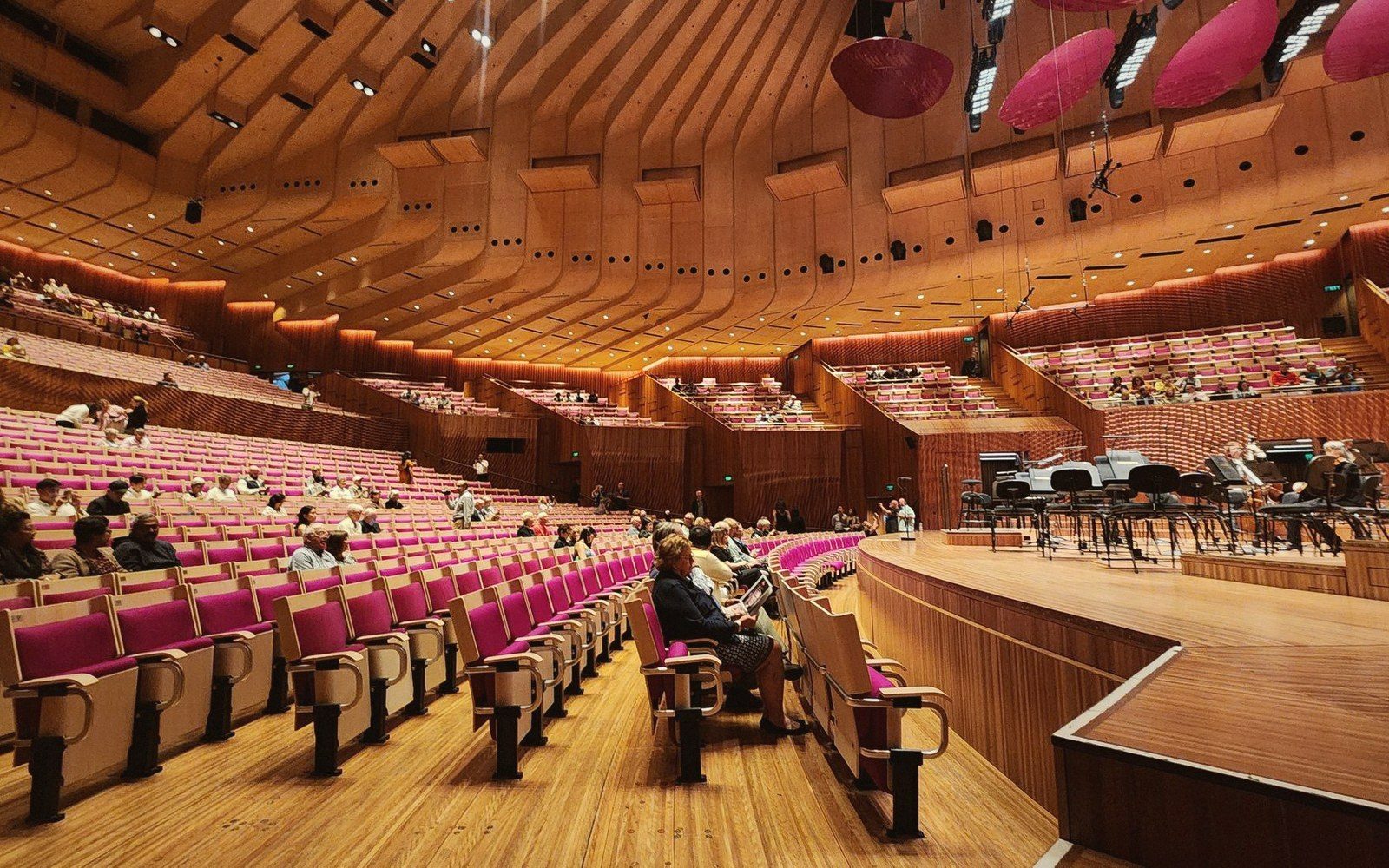
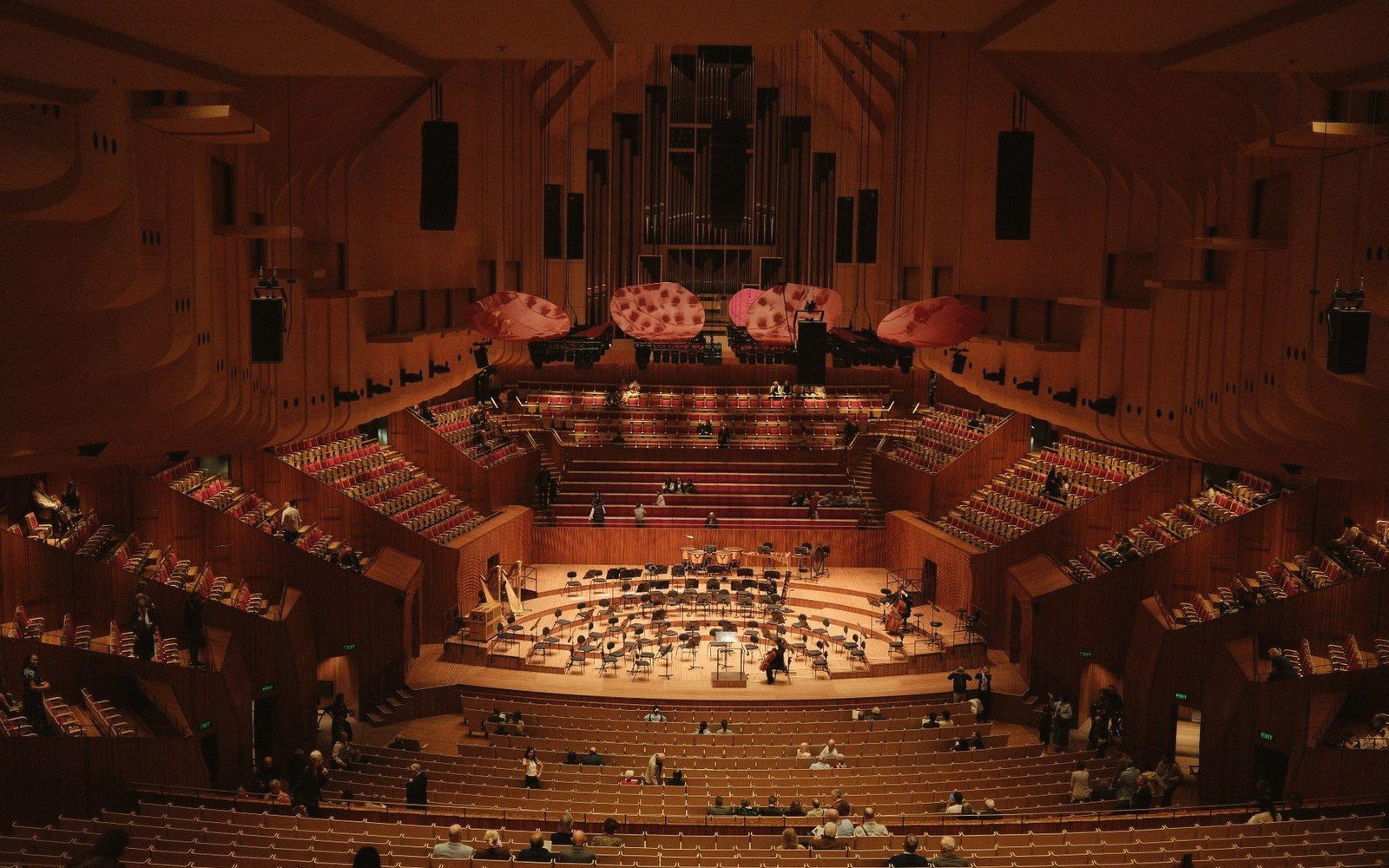
The physics of an unamplified voice against a full orchestra — and why the building is as much instrument as backdrop.
The Problem the Architecture Has to Solve
No microphone, no amplification, no reinforcement. A soprano must carry over ninety or more orchestral players and reach the back of a hall seating two thousand. The question is not volume — opera singers are louder than many people expect — but how the room helps them. An opera house is not a passive shell. It is a tuned instrument, and different houses have made very different choices about what to tune it for.
Start with the reverb time — the number of seconds a sound takes to decay after it stops. Concert halls typically want something around two seconds for the bloom that orchestral music needs. A theatrical space runs shorter, around one to 1.4 seconds, because intelligibility matters: you need to hear the words. Opera sits uncomfortably between those two demands. The singers want the room to carry them; the text needs to arrive clearly; the orchestra needs neither to drown the voice nor to die into a dry acoustic. The architect is trying to serve three masters with one room.
What Shape Does to Sound
The horseshoe plan — the form most people picture when they think of an opera house — was not chosen for sightlines, or not only. Its curved tiers of galleries send sound back toward the stage in short, controlled reflections. The sound bounces off wall surfaces close to the audience rather than traveling long distances across open air. That geometry means the voice gets distributed rather than dissipated. La Scala in Milan, the Vienna Staatsoper, the Paris Opéra Garnier: all variants of this horseshoe tradition, all with that characteristic intimacy — the sense that the singer is addressing you rather than projecting past you.
The shoebox plan, preferred for concert halls, is a rectangle, long and narrow, with parallel side walls that bounce sound back and forth in a controlled series of lateral reflections. That pattern builds orchestral richness. It is less kind to the voice-over-orchestra problem, because a shoebox tends to blend everything into the reverberation rather than letting the voice sit on top of it. Some newer multipurpose houses have tried variable acoustics — moveable panels and ceiling baffles — to shift between modes. These work, imperfectly, as a compromise.
The covered pit deserves its own mention here. Bayreuth uses a hooded pit specifically to blend the orchestra into the room before the sound reaches the audience, softening the attack of the brass and preventing the orchestra from overpowering singers. It is a radical solution to the balance problem, and it creates a sound unlike any conventional house — more diffuse, more mysterious, and very specifically suited to Wagner's long-lined writing.
What Singers Know That Audiences Don't
Ask a singer where they feel the room working and they will often point to surfaces rather than distance — the wood of old-fashioned boxes, the plaster of deep-carved ornamentation. These materials diffuse sound at frequencies where voice lives, scattering it evenly rather than reflecting it as a hot beam. Modern concrete and glass tend toward harder reflections and a less forgiving acoustic for voice. Many refurbished houses have learned this expensively.
A soprano must carry over ninety or more orchestral players and reach the back of a hall seating two thousand.
The upshot is that a great operatic acoustic is not a neutral acoustic. It is one calibrated to privilege voice over everything else without killing the orchestra — a bias built into surfaces, angles and volumes, solved differently in Vienna than in Milan, in Bayreuth than in any repertory house you can name. The room tells you what the art form actually is.