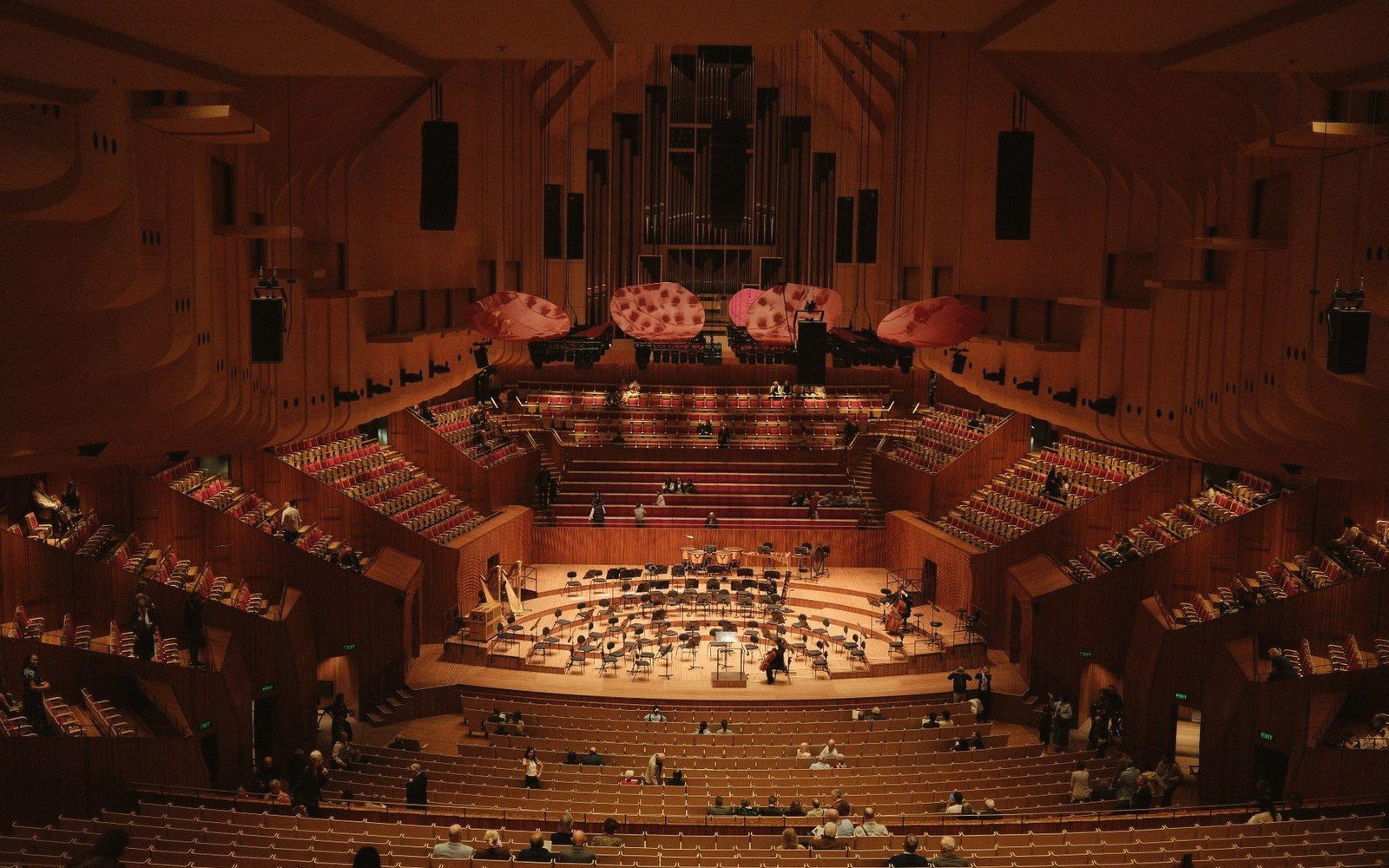
What is not ordinary is the acoustic. La Scala sits in a tradition of Italian horseshoe houses designed to throw sound toward a standing-room pit and a tiered box system, and it does this with unusual precision and warmth. The wooden structure of the boxes contributes to the characteristic resonance — the 2004 restoration was specifically engineered to preserve this — and the result is a sound that carries detail without the forced brightness of a modern hall. Singers report that the house gives back clearly, meaning the performer can hear themselves against the orchestra without straining to judge balance. This matters: a house that disorients its singers produces worse singing.
What the Myth Does to the Facts
The mythological version of La Scala centres on its audience, specifically the loggione — the topmost standing gallery, where a knowledgeable and famously unforgiving crowd has historically been willing to boo, loudly and in unison. The loggionisti have become a dramatic feature of the house's identity, invoked as proof that La Scala holds standards other houses let slide. This is only partly fair. The gallery has produced some of the most accurate public criticism in the business and some of the most political; the line between aesthetic judgement and partisan loyalty to a particular singer has not always been clean. The story gets cleaned up in the retelling.
The artistic record is real and does not need exaggeration. Verdi's connection to the house runs across decades and includes the premieres of works now central to the repertoire. Toscanini's tenure as principal conductor in the early twentieth century established an expectation of orchestral discipline that shaped the house's self-image for generations. Maria Callas's performances there in the 1950s — whatever the personal difficulties that eventually separated her from the institution — remain reference points not just for Scala but for how the Italian soprano repertoire is understood. These are genuine chapters in the history of the art form, not press office confections.
The problem is that La Scala's mythology functions as a kind of quality guarantee that the house has not always honoured. Its programming has at times been conservative, its industrial relations famously turbulent. The 2004 reopening under Riccardo Muti — who subsequently resigned in 2005 after a vote of no confidence from company staff — illustrated that prestige and functional coherence are separate things. A house can carry enormous historical weight while also being genuinely difficult to run.
The Building Versus the Brand
What distinguishes La Scala from, say, a well-funded regional Italian house is not simply the acoustic or the architecture, both of which have their equals, but the accumulation of historical decisions made there — what was premiered, what was cancelled, who sang under pressure and how, which conductors built their methods in that pit. The building is the container for a record, and the record is extraordinary. The mythology mistakes the container for the content.
A first-time visitor expecting a singular visual revelation occasionally finds something more familiar-looking than the mythology prepared them for.
This matters practically for anyone trying to use La Scala as a reference point. When people say a performance was worthy of La Scala, they mean something, but they rarely mean the horseshoe and the cream-and-gold plasterwork. They mean the accumulated standard implied by the house's history. That standard is real; the building that holds it is excellent but not magical. The two deserve to be held separately, because conflating them produces both excessive reverence toward the institution and excessive cynicism when it fails to levitate.