The heroic tenor is the rarest voice in opera not because of some ineffable gift but because the job description is physiologically brutal.
The Physics of the Problem
A Heldentenor — the German term for the heroic tenor required by Wagner, Strauss, and a handful of related works — needs to do several things at once that human vocal anatomy was not designed to do simultaneously. He must project a full, heavy sound across a four-hour evening without a microphone, over an orchestra that in Siegfried or Götterdämmerung might number a hundred players. He must sustain that projection on pitches that sit at the top of the tenor range — the passaggio, the break between chest and head voice, is exactly where the most demanding phrases land. And he must do this while carrying the dramatic and vocal weight of a baritone. The voice has to be big enough to be a dramatic voice and high enough to be a tenor. The combination is rare because it is not a compromise; it is two contradictory things at once.
The role of Siegfried, the most demanding single assignment in the Wagnerian repertoire, demands many hours of singing across the cycle — though in practice the role of Siegfried the character, appearing in the third opera and finale, requires a tenor to sing nearly three hours in Siegfried alone without a significant rest. Tristan, in Tristan und Isolde, is on stage for most of three acts, the third of which is essentially one extended scene of physical and vocal extremity. These are not roles that ask a voice to show off and exit. They ask it to sustain.
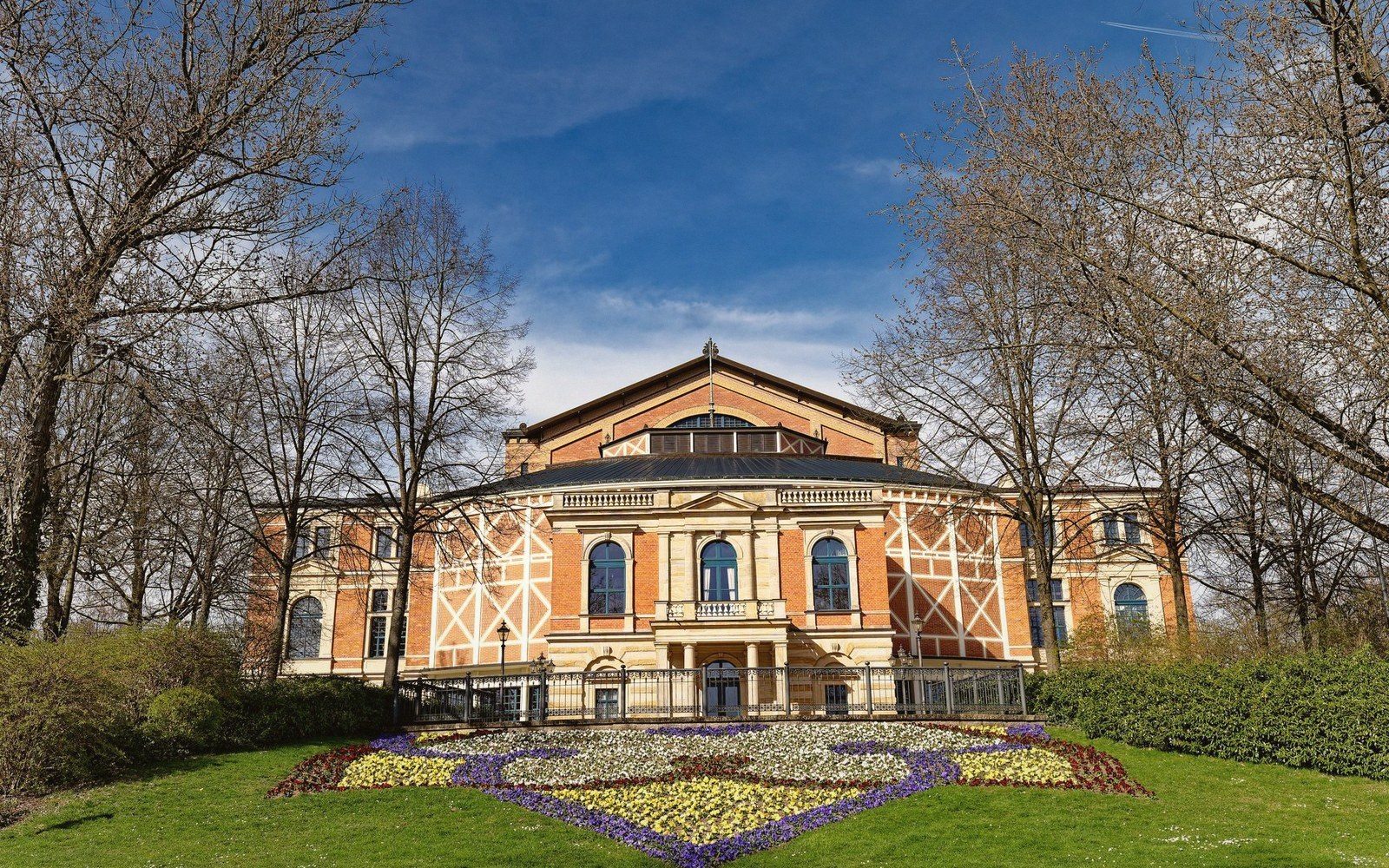
The covered orchestra pit at Bayreuth — designed precisely to blend and cushion orchestral sound — was partly Wagner's acknowledgement that he had written something close to the physiological limit. Even with that architectural concession, the singing required is extreme.
What Gets Destroyed, and When
The scarcity of Heldentenors at any given moment is a function of attrition as much as rarity. Voices that can do this work are developed slowly, often from a lyric base, because pushing a young voice into the dramatic repertoire too early is the most reliable way to shorten a career. The standard advice — observed inconsistently in practice — is that a tenor should not take on Siegfried before the mid-thirties at the earliest. By that point he has usually spent a decade or more in lighter Wagner (Lohengrin, Walther in Die Meistersinger) or Italian dramatic repertoire, building stamina and support before the full weight of the Ring falls on him.
What the voice actually risks is nodule formation, muscular fatigue, and the gradual loss of the upper register — the high Cs and Bs that the repertoire demands and that an aging dramatic voice surrenders first. The career window between ready and finished can be remarkably short. Some voices never quite open; some open and close within a decade. A lyric soprano who makes her career in Mozart and early Verdi has a structural advantage over a Heldentenor: her repertoire does not require the same sustained extreme output, and her instrument has more margin. The distinction between lyric and dramatic voices is never more consequential than here.
This mechanical attrition is why every generation produces perhaps a handful of singers capable of the work at the required level, and why opera companies will schedule around their availability, build seasons to secure them, and occasionally mount entire Ring cycles on the strength of one name.
What the Voice Actually Sounds Like
The confusion people have about the Heldentenor is imagining that heroic means loud and brute. The great voices in this category — and the historical recordings bear this out even through the limitations of the medium — share a quality of resonant weight combined with legato line. The sound is dark for a tenor, the vowels open and forward, the top notes achieved by support and column rather than by forcing. When it works, it does not sound effortful. That is the paradox: the voice that survives this repertoire is one that has found, through training and physical intelligence, a way to produce enormous sustained sound without the muscular tension that would destroy it.
And he must do this while carrying the dramatic and vocal weight of a baritone.
The Fach system formally distinguishes the Heldentenor from the lyric tenor and from the Italian spinto — the pushed, driven tenor of Verdi and verismo — because the vocal production, the repertoire, and the physical demands are genuinely different categories, not points on a single scale.
Scarcity, then, is not mystical. It is the predictable outcome of a repertoire that requires a particular physiology, a long developmental arc, a narrow window of peak readiness, and conditions that actively shorten the instrument's working life. The wonder is not that there are so few. The wonder is that any voice survives it at all.