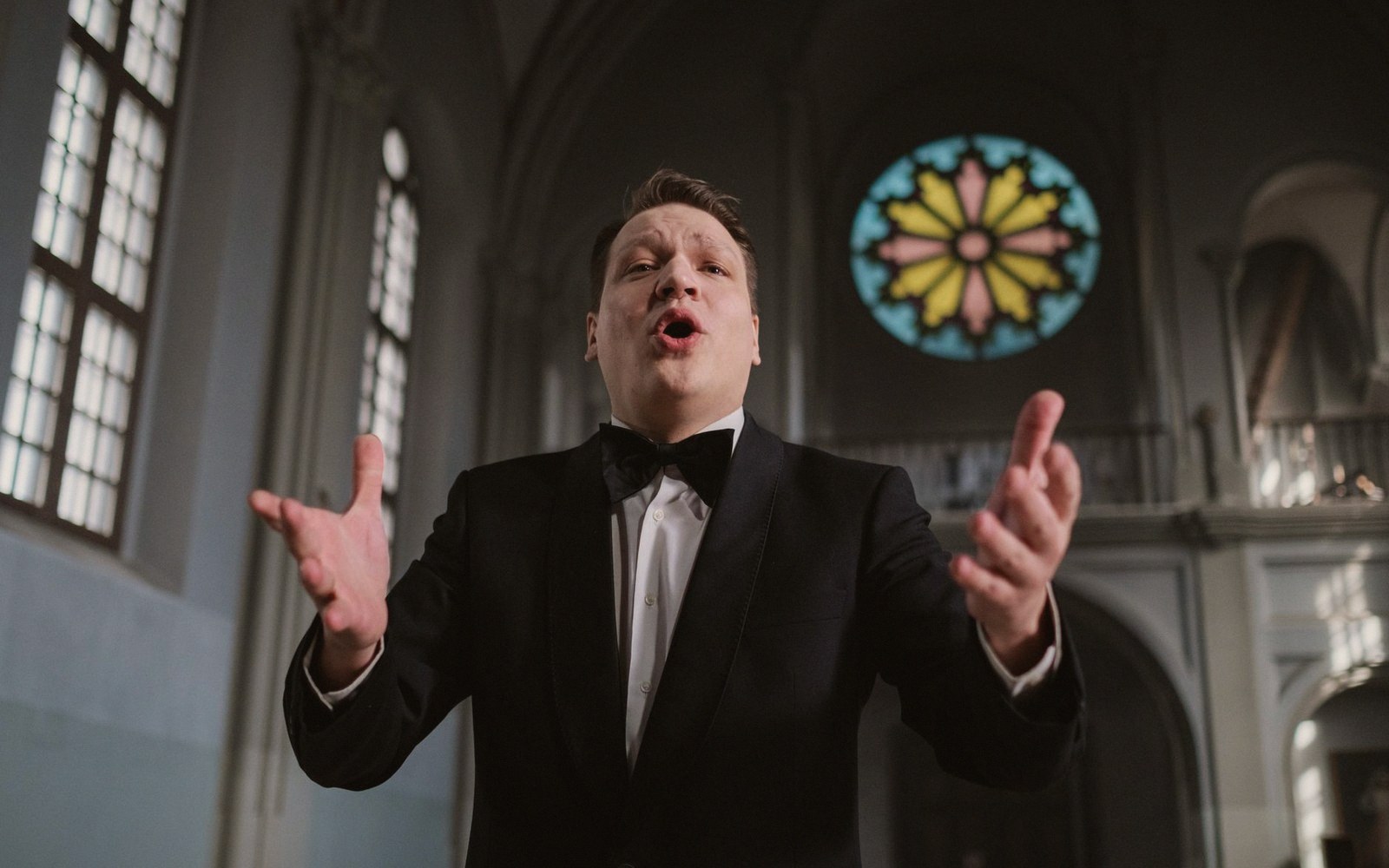
The twentieth-century revival of the countertenor rewrote Baroque opera. What it rewrote it into is a harder question.
What the Voice Actually Is
A countertenor is a male singer who works primarily in his falsetto register — the lighter, head-dominant mechanism that sits above the modal, chest-based voice. The tone that results is unlike anything else in the house: cool or reedy in some singers, rounded and warm in others, but always identifiably different from the female mezzo-soprano or contralto it is often deployed alongside.
The distinction that matters is between a countertenor and a castrato. The castrato — a male singer surgically altered before puberty to preserve an unbroken voice — produced a sound no living person has heard as intended. The surgery kept the child's larynx small while the lungs and ribcage grew to adult size. The result was lung capacity and breath support on a scale no normal voice can match, driving a high, flexible tone through a chest built for power. A countertenor, however skilled, is working with adult male anatomy in falsetto. He is not a replacement for the castrato; he is the closest available approximation.
This matters because a large portion of the Baroque and early Classical repertoire — operas by Handel, Vivaldi, Gluck, early Haydn, and others — was written for castratos or for a mix of castratos and natural sopranos. When Alfred Deller began his countertenor career in postwar England, and when the wider early-music revival gathered pace in the 1960s and 1970s, these roles needed voices. The countertenor filled the space. What it could not fill was the exact acoustic gap the castrato had occupied.
The Revival and Its Argument
The early-music movement made a confident case: period instruments, reduced forces, historically informed tempi, and — where heroic male roles existed — countertenors rather than the female mezzo-sopranos or transposing tenors who had colonised the repertoire through the nineteenth century and much of the twentieth. The case was partly historical, partly aesthetic. Baroque opera had been designed around a particular sound and a particular kind of agility; modern voices trained in the Romantic tradition were blunt instruments for this music.
The argument is broadly right and the results are frequently convincing. Countertenors such as Andreas Scholl, David Daniels, and Philippe Jaroussky have demonstrated that the falsetto mechanism, trained to a high level, can carry Handel's ornamental lines and sustain long Baroque phrases with real intelligence. Recordings and productions built around these voices have opened the repertoire to a generation of listeners who might otherwise have encountered only the mezzo-substitution versions.
But the argument oversimplifies in ways worth naming. We do not know what a castrato sounded like; we have descriptions, we have contemporaries' reactions, and we have the physiology, but no recording of a castrato in his prime. The claim that a countertenor is the historically correct choice is more precisely the claim that it is less historically incorrect than a mezzo. That is not nothing, but it is a narrower victory than the revival has sometimes claimed. Handel himself was not rigid about voice type: he transposed roles, rewrote them for different singers, and rebuilt entire operas when his cast changed. The notion of a single authentic solution to each role would have puzzled him.
The distinction that matters is between a countertenor and a castrato.
There is also a purely practical question about power and projection. Falsetto, even when fully supported, does not carry through a large house the way a trained chest voice does. In an intimate theatre or a recording studio, the balance is manageable. In a 2,000-seat house with a full orchestra, a countertenor can struggle where a dramatic mezzo would not.
None of this is a reason to abandon the voice or the revival it enabled. The countertenor is one of the more distinctive sounds in opera today, and the repertoire it unlocked was genuinely inaccessible before. But the history is messier than the revival's founding story suggests — and the voice is better understood, not worse, for acknowledging that.