Wagner designed the Ring to be heard whole. Almost nobody hears it whole. Both facts matter.
Der Ring des Nibelungen — Richard Wagner's cycle of four music dramas, composed over roughly twenty-five years and first performed complete at Bayreuth in 1876 — is probably the most discussed work in the operatic repertoire that most listeners know only partially. That partial knowledge is not a failure of dedication. It is the normal condition, built into the work by its own impossible demands.
Wagner called it a Bühnenfestspiel (a stage festival play) for three days and a preliminary evening. The preliminary evening is Das Rheingold, around two and a half hours without interval. Then come three full-length works: Die Walküre, Siegfried, and Götterdämmerung. Together they run close to fifteen hours of music. No other work in the repertoire asks as much of a house, a company, or an audience.
Four individual works, one continuous argument
Each of the four scores can stand independently in obvious ways. Die Walküre, the most frequently performed piece of the cycle, has a dramatic arc that functions on its own: a forbidden love, a father's betrayal of his own child, a disobedient goddess condemned to sleep on a fire-ringed rock. Götterdämmerung, the final evening, has a plot complete enough — treachery, murder, immolation — that opera houses programmed it as a standalone well before the full cycle became a practical reality.
But Wagner designed these works to accumulate meaning through repetition and transformation of what he called Leitmotiven — leading motifs, short melodic or harmonic ideas attached to characters, objects, and ideas. There are dozens of them in the Ring. The motif first heard when Alberich curses the ring in Das Rheingold returns, developed and darkened, at the very end of Götterdämmerung. Heard in sequence, the recurrence carries fifteen hours of dramatic weight. Heard only at the end, it carries the weight of whatever memory the listener brings, which may be nothing at all.
This is not a small difference. The Leitmotiv system in the Ring functions less as a labelling device — here comes Siegfried, here is the spear — and more as a continuous musical argument. Themes combine, collide, and contradict each other in ways that track changes in a character's moral situation. When Siegfried's heroic motif appears twisted in the bass strings as he drinks the potion that erases his memory, it means something specific about what heroism looks like from the wrong angle. That meaning depends on having absorbed the motif over hours and evenings.
The case for hearing it in pieces is not simply one of convenience. A single Walküre, properly performed, produces a concentrated dramatic experience that a Ring cycle cannot replicate: the audience arrives fresh, the pacing is calibrated to one evening, and the emotional throughline is clear. Some of the work's most extraordinary music — the Ride of the Valkyries, the Wotan-Brünnhilde farewell, the Magic Fire Music — hits with maximum force in this context. There is no fatigue, no accumulated bewilderment.
What the cycle actually does
The counter-argument is structural rather than emotional. The Ring is not, at its root, a love story or a heroism story. It is a story about the corruption of power, the impossibility of freedom within systems built on domination, and the failure of every plan made by those in authority. That argument cannot be stated in one evening. It is made by accumulation: Das Rheingold sets up the original crime; Die Walküre shows the consequences reaching into the next generation; Siegfried follows a hero shaped by the corrupted world he never understands; Götterdämmerung destroys everything, and the question of whether anything survives the destruction is left genuinely open.
That arc — setup, consequence, the hero's ignorance, catastrophe — is a different kind of story from what any individual evening tells. Miss it, and you have four powerful works. Hear it complete, across four or five days with the right company beside you, and you have something that resembles the experience of reading a long novel more than it resembles a night at the opera. The emotional texture changes. You begin to feel the length as the characters feel the weight of history.
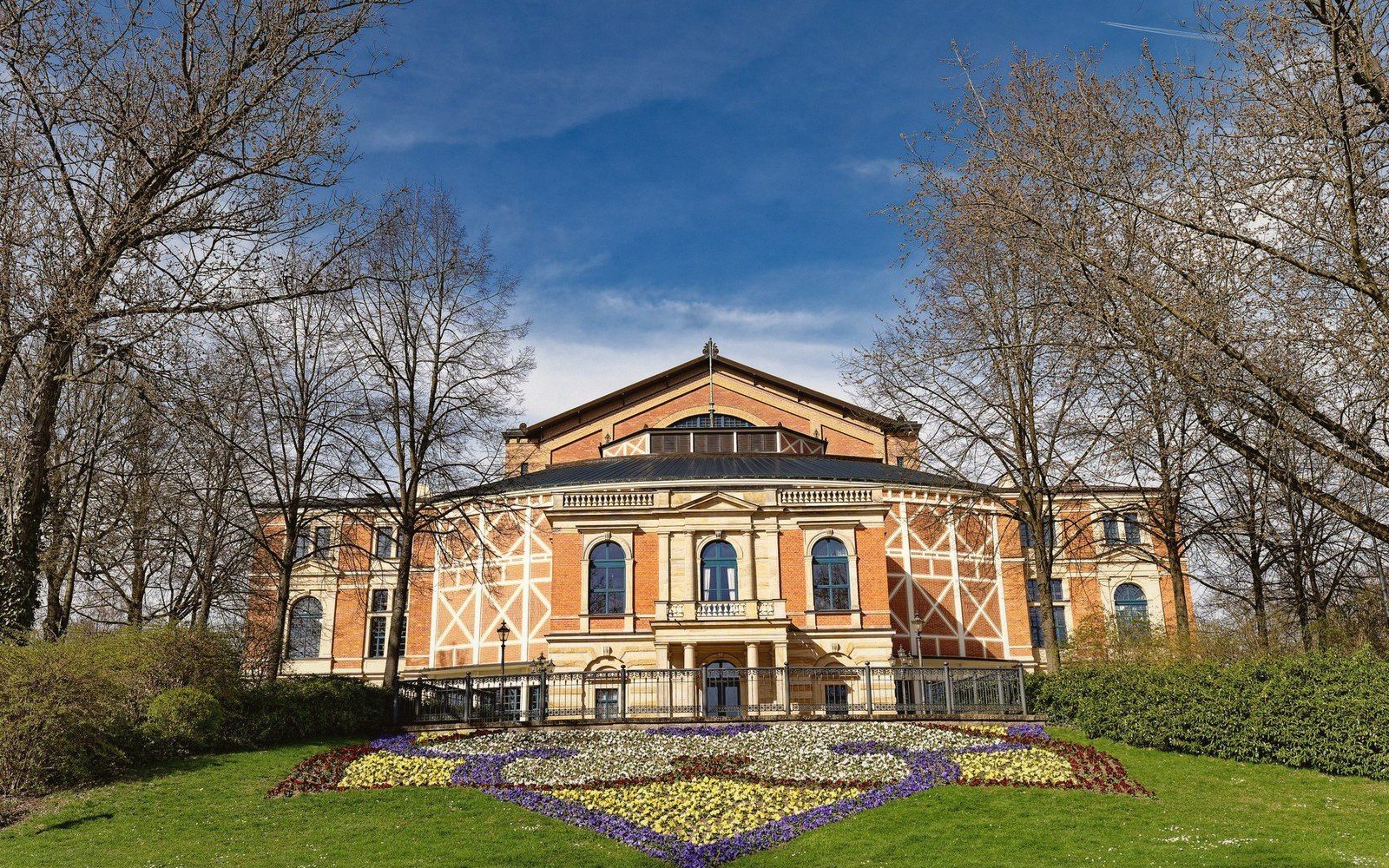
This is why the question of whether the Ring is one work or four is not merely a scheduling problem. It is a question about how narrative operates in music drama. Wagner insisted that the cycle be heard as a whole at Bayreuth from the beginning, and the Bayreuth Festspielhaus — with its covered pit, its particular acoustic, its festival-week structure — was designed to enforce that condition. The pilgrim model of opera-going that Bayreuth established is partly an artistic argument: certain things cannot be experienced in one sitting, and the architecture of the experience is itself meaningful.
It is the normal condition, built into the work by its own impossible demands.
What a listener loses by encountering Walküre alone is not the plot — the plot survives perfectly well. What is lost is the sense that the drama is responding to something that happened before and reaching toward something not yet resolved. The gods sitting at the close of Act Two of Walküre, trapped by their own laws, are more frightening if you spent the previous evening watching those laws get written. That is what the cycle form exists to deliver, and it is not reproducible in extracts.
Neither mode of encounter is wrong. But they are not the same experience, and they should not be described as if they are.